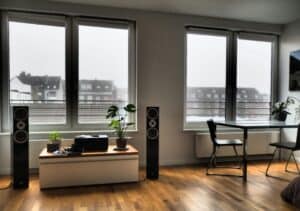
Photo by Annie Spratt on Unsplash
Project Overview: Enhancing AI’s Understanding of Acoustic Environments
My work contributed to a vital project aimed at improving how Meta AI understands the acoustic properties of different environments. The core problem was to collect specific voice data that would help train a room acoustic detection model. This model is essential for Meta AI products to accurately interpret speech and deliver tailored audio experiences, regardless of the user’s physical surroundings.
Methodology: Controlled Acoustic Data Collection
To achieve this, the project utilized a precise data collection methodology:
- Diverse Acoustic Environments: One male and one female speaker recorded themselves in a variety of rooms, specifically chosen for their varying sizes and reverberation levels. This ensured the collected audio data captured a wide spectrum of real-world acoustic characteristics.
- Device-Specific Recordings: Recordings were captured while speakers wore Meta Quest 3 headsets and Ray-Ban Meta glasses, directly reflecting the target devices where Meta AI’s acoustic models would operate.
- Targeted Speech Prompts: Speakers recited specific prompts, including common voice commands like “Hey Meta, what time is it,” to generate speech data that would directly inform the training of the room acoustic detection model.
My Contribution: High-Fidelity Voice Data for Acoustic Modeling
My unique contribution to this foundational AI work was serving as the dedicated female speaker for this extensive data collection effort.
- I systematically recorded my voice across all specified diverse room environments and device conditions. This provided the crucial female voice data necessary for training the room acoustic detection model to accurately identify and classify different acoustic spaces.
- My precise execution of the recording protocol ensured the high fidelity and consistency of the audio data, directly influencing the quality and effectiveness of the AI’s acoustic training sets.
Impact: Direct Influence on Meta AI’s Environmental Awareness
My contribution to this project had a direct and significant impact on Meta AI’s capabilities:
- Enhanced AI Environmental Awareness: The high-quality voice data I provided is fundamental to training and refining Meta AI’s ability to “hear” and understand the room it’s in. This allows the AI to adapt its processing based on the acoustic environment.
- Improved User Experience (Contextual Audio): By enabling the AI to detect room acoustics, this work ultimately supports a more intelligent and responsive user experience. This could lead to features like improved voice command recognition in noisy rooms, better spatial audio rendering that accounts for room reverberation, or optimized audio output for specific environments.
- Foundational for Future AI Development: My contribution provided essential data for a specialized aspect of AI model training, laying groundwork for more sophisticated and context-aware AI interactions in Meta’s products.